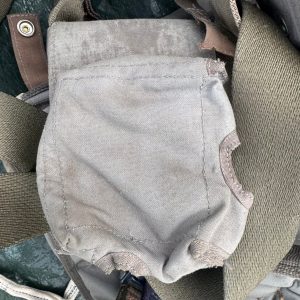
The Aircrew Parachute Harness/Pack – Vulcan & Victor Crew Seats offers collectors, restoration specialists, museums, aviation historians, and qualified equipment professionals a distinctive example of military flight safety equipment.
An Aviation Parachute Harness provides the structural connection between the wearer and a compatible parachute system, while a Pilot Parachute Harness must fit correctly and correspond with the intended equipment configuration.
Whether buyers seek an Aircraft Emergency Parachute Harness, Aircrew Safety Harness, Flight Crew Parachute Harness, Emergency Parachute Harness, or Military Aircrew Harness, exact system identity should guide evaluation.
The Aviation Emergency Escape Harness, Parachute Harness Assembly, Aircraft Crew Safety Equipment, Aircrew Emergency Equipment, and Pilot Emergency Parachute System form part of a broader aviation safety category.
The Flight Parachute Harness should remain matched with the correct parachute pack, seat arrangement, attachment hardware, and operating system.
Key Details of the Crew-Seat Parachute System
The offered harness and pack should be identified through visible labels, part numbers, contract markings, manufacturer information, dates, inspection stamps, and known aircraft-seat relationships.
Photographs should show the front, rear, sides, webbing, buckles, attachment points, pack, labels, stitching, hardware, and areas of wear.
Parachute Harness Webbing and Hardware
Metal hardware can corrode, crack, deform, seize, or develop sharp edges that damage surrounding material.
Repairs should not be assumed acceptable merely because they appear neat or use similar-colored material.
Pilot Parachute Harness Fit and Adjustment
Historic equipment intended for display should remain clearly separated from equipment evaluated for operational use.
Frozen or stiff hardware should not be forced because this can tear material or damage rare components.
Evaluating Historic Escape Equipment
Operational claims should never be made without current specialist inspection and applicable documentation.
Attachment points should be checked for deformation, wear, corrosion, cracks, missing components, incorrect hardware, and evidence of loading or repair.
Choosing an Aircrew Safety Harness
The intended function should be established through technical references and component markings rather than appearance alone.
Metal parts should be isolated from materials that may encourage corrosion or staining.
Evaluating a Flight Crew Parachute Harness
A clean appearance does not establish structural strength or operational suitability.
The seller should disclose whether the harness has been professionally inspected, displayed, stored, worn, repaired, cleaned, or tested.
Emergency Parachute Harness Inspection
The item should not be opened, repacked, or disassembled without suitable knowledge because historic arrangements may be lost.
Leather or rubber components may harden, shrink, crack, or become brittle during storage.
Vulcan and Victor Aircrew Equipment
Original components with clear labels and matching hardware may be particularly desirable for accurate displays.
Displays should limit exposure to bright light, humidity changes, dust, and public handling.
Aviation Emergency Escape Harness System
Missing components can limit the accuracy of a restoration or display.
Reference photographs and manuals may help reconstruct the intended arrangement.
Military Parachute Pack Components
Completeness should be described through visible evidence and available records.
Loose components should be photographed, labeled, and packaged separately so they are not lost or mistaken for unrelated hardware.
Military Crew Survival Gear
Each item should be identified and evaluated individually because age, storage, configuration, and service history can differ.
Routine preservation should include gentle dust removal, condition photography, label recording, humidity control, pest monitoring, and suitable storage support.
Historic Aircrew Emergency Equipment
The item may have educational value even when it is incomplete or unsuitable for operational use.
The product listing should identify whether the item is original, restored, repaired, modified, reproduction, mixed-component, or unverified.
Pilot Emergency Parachute System
Any operational consideration requires current evaluation by appropriately qualified parachute personnel.
Collectors should avoid deploying, unpacking, repacking, or load-testing rare equipment without understanding the effect on originality and condition.
Preserving an Aviation Harness Assembly
Reversible display methods protect authenticity and long-term value.
The harness should not be worn by visitors when age, strength, or contamination is unknown.
Evaluating Parachute Harness Value
Clear intended-use classification supports responsible transactions.
Commercial value can be influenced by verified Vulcan or Victor association, rare markings, complete hardware, original pack configuration, preserved labels, and documented history.
Choosing Aircraft Parachute Equipment
A harness associated with one Vulcan or Victor seat position may differ from equipment used by another crew member.
The seat itself should be reviewed for attachment points, routing, hardware, clearances, and equipment relationships before a harness/pack is installed for display.
Vulcan and Victor Harness Condition Guide
A detailed review reduces uncertainty and supports realistic valuation.
- Request photographs of the front, rear, sides, webbing, stitching, buckles, attachment points, pack, labels, and included loose parts.
- Check metal hardware for corrosion, pitting, cracks, bending, sharp edges, seized movement, plating loss, and mismatched parts.
- Inspect and photograph the item immediately after delivery before cleaning, opening, adjusting, mounting, repairing, or separating components.
Storing the Aircrew Parachute Harness/Pack
The harness and pack should be stored in a clean, dry, stable environment with moderate temperature, controlled humidity, limited light, and protection from pests.
Condition photographs taken from consistent angles can reveal gradual changes over time.
Historic Parachute Equipment Presentation
Padded ties, archival supports, or reversible brackets may help maintain the display while avoiding permanent alteration.
The equipment should remain accessible for periodic inspection without requiring extensive dismantling.
Protecting Aviation Safety Equipment
Aggressive cleaning can remove original markings, finishes, inspection evidence, or historically significant wear.
Documentation should record every intervention, added component, cleaning method, and display modification.
Final Thoughts on the Vulcan and Victor Harness Assembly
When carefully inspected, stored, documented, conserved, and displayed, the Aircrew Parachute Harness/Pack – Vulcan & Victor Crew Seats can remain a valuable military aviation artifact.
Careful technical, historical, and commercial evaluation can reduce authenticity concerns, condition surprises, missing-component costs, and unsuitable-use assumptions.
Whether the assembly is purchased for restoration, check here research, display, reference, collection, or specialist evaluation, transparent documentation and responsible handling provide the strongest foundation.
With accurate identification, preservation-focused care, suitable environmental control, and careful interpretation, the assembly can remain an important military aviation artifact.